AFP Greater Madison book read explored personal steps towards systems change in philanthropy
AFP Greater Madison members, area funders, and community members met at the Central Library in late October for a group discussion of this year’s chapter book read subject: Decolonizing Wealth by Edgar Villanueva (published 2018; expanded second edition 2021). A special thank you to everyone who attended and Abha Thakkar for her expert facilitation.

Duncan Shultz, Wisconsin Foundation and Alumni Association; Abha Thakkar, Mosaic LLC; Dani Luckett, The Nature Conservancy
What we covered
Villanueva’s book explores the connection between major U.S. foundations (and the greater philanthropic industry, as the author calls it) and how wealth in the U.S. has historically been built through the exploitation of labor and land belonging to Black and indigenous people. Villanueva relies on personal experience as a grant-maker, interviews with fellow philanthropy professionals representing BIPOC communities, and analysis from an indigenous American viewpoint to describe a system of foundations, grants, endowments, investment policies, and disconnected decision-making that often does more harm than good for black and brown communities.
Reframing money as life-giving “medicine,” as understood in a Native American context, Villanueva promotes a humanizing and democratizing sea change in the landscape of philanthropy at local and national levels.
Taking action after this book read
Villanueva presents “Seven Steps to Healing” that anyone can use to transform their relationship with money from exploitative to relational:
Grieve: acknowledge harm caused by colonization and resource extraction, both historically and as the basis for contemporary institutions
Apologize: offer sincere, specific apologies for harms done at personal and institutional levels
Listen: prioritize historically marginalized voices in philanthropic decision-making
Relate: build non-transactional relationships based on trust across lines of power and difference
Represent: restructure boards, advisory councils, and other grantmaking bodies so they reflect the communities they serve
Invest: shift capital allocation into efforts such as BIPOC-led organizations, trust-based funding relationships, and reparative investments
Repair: as the culmination of all previous steps, support healing and restorative justice through mechanisms such as returning land, paying reparations, and forgiving debts
Discussion facilitator Abha Thakkar asked the group to consider questions such as “what concrete shifts in culture or structure would be necessary to make philanthropy accountable to the communities it aims to serve?” Abha led the group through a flash training of how systems change can grow out of individual change following this model:
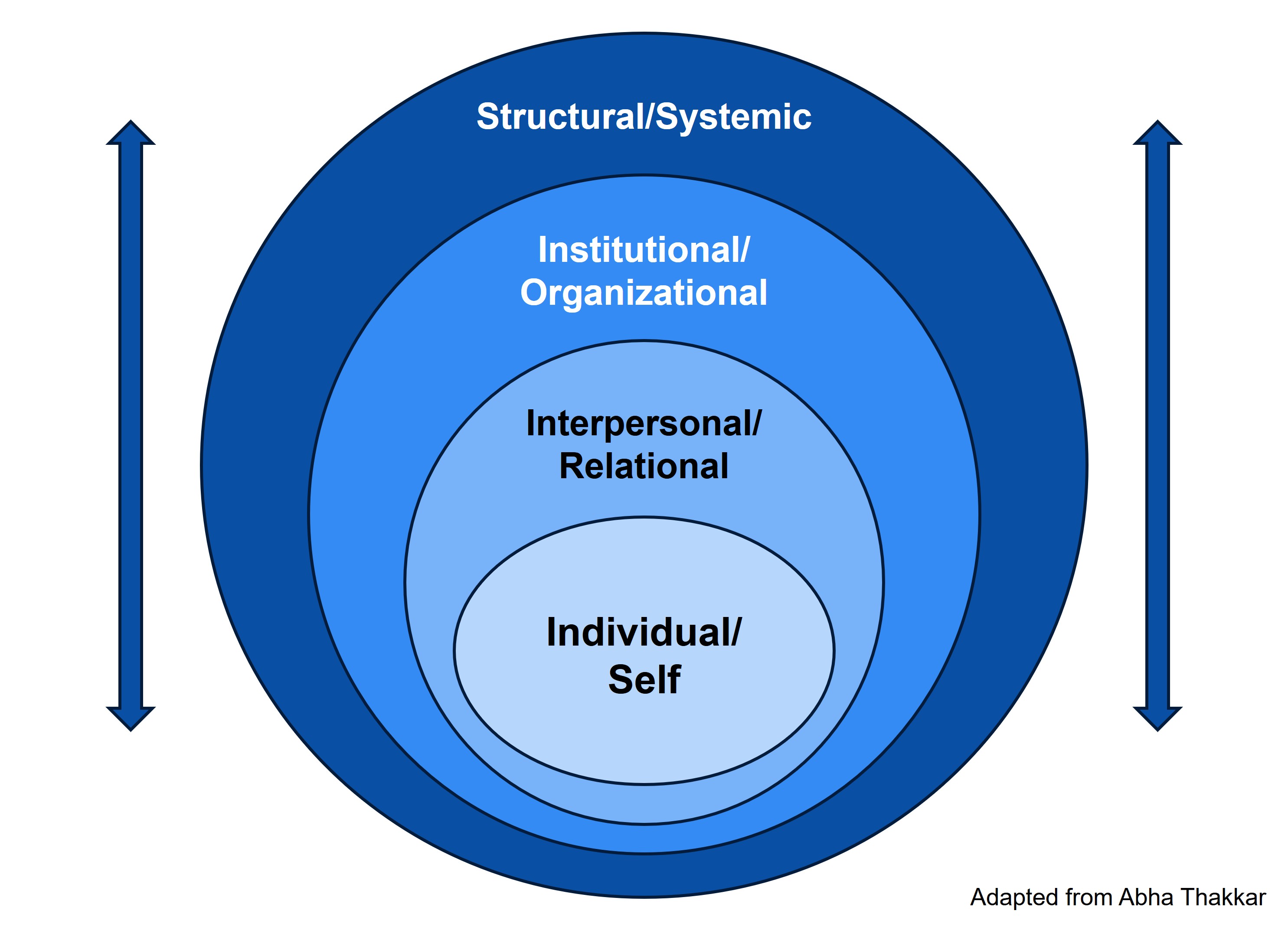
Conversation participants reflected on the difficulty of knowing the right next step in taking action toward systems-level change, but left the evening with a renewed sense of energy, preparedness, and shared commitment to build equity in our local community.
What will we read next?
Could you recommend a book for a future AFP book read? Email us with your recommendation – we’d love to hear from you.